


Field Service
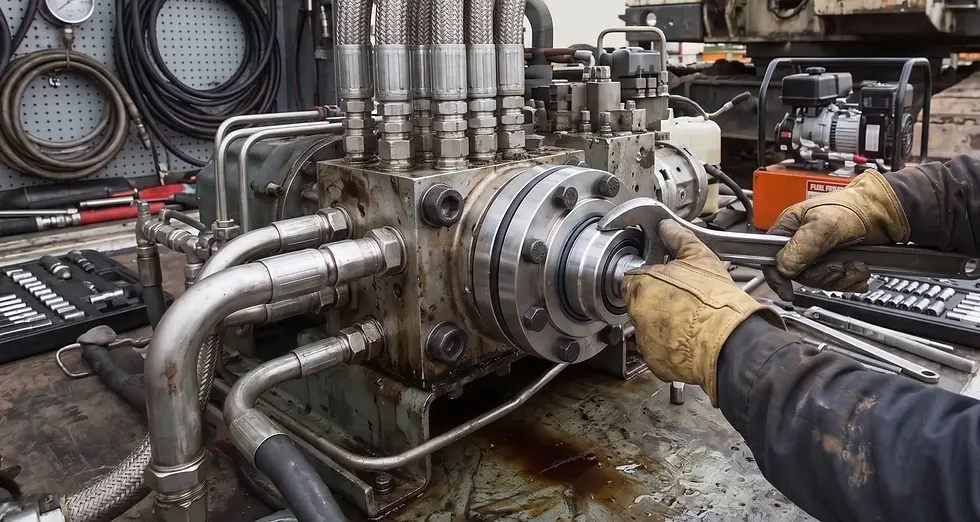
PSI Hydraulics brings hydraulic expertise directly to your equipment. Our field service team diagnoses system problems, performs onsite repairs and installation, and handles regular maintenance for industrial facilities, mobile equipment, and other hydraulic machinery. When a problem must be addressed in the shop, we can identify the work needed and coordinate the next steps.

Overview
Hydraulic problems do not always start or end with a single failed component. A leaking cylinder, slow actuator, or recurring system issue can be affected by pressure, contamination, alignment, valves, tubing, hoses, or the way a machine operates under load.
PSI Hydraulics evaluates equipment where those conditions occur. Our onsite team can troubleshoot the system, repair hydraulic equipment, install components or assemblies, and perform routine maintenance at the customer’s location. Working at the machine allows us to see how its hydraulic components interact and address issues that may be missed when a part is examined on its own.
The work performed during a visit depends on the equipment, access, and repair required. If a component needs machining or a more extensive rebuild, PSI can determine what should be handled at its repair facility while helping the customer plan the return to service.

Specifications & Manufacturing Options
Onsite Services
Hydraulic troubleshooting and system diagnosis
Onsite hydraulic repair
Component and assembly installation
Hydraulic tubing installation and onsite bending
Equipment inspections
Scheduled hydraulic maintenance
Failure evaluation and repair planning
Shop repair coordination when required
Equipment Evaluated
Hydraulic cylinders
Hydraulic power units
Hydraulic manifolds
Hydraulic valves
Hydraulic hoses
Industrial hydraulic systems
Mobile hydraulic equipment
OEM machinery
Engineering Considerations
Operating pressure verification
Machine alignment
Hydraulic fluid condition
Contamination indicators
System leakage
Mounting condition
Operating cycles
Equipment loading
Capabilities
On-site hydraulic diagnostics
Hydraulic troubleshooting
Equipment inspections
Failure analysis
Hydraulic system evaluations
Maintenance recommendations
Repair planning
Technical support for industrial and OEM equipment
Onsite repair
installation
scheduled maintenance
Applications
Field service supports equipment including:
Industrial manufacturing equipment
Hydraulic presses
Construction equipment
Agricultural machinery
Material handling systems
Oil and gas equipment
Mining equipment
Marine hydraulic systems
Waste and recycling equipment
Specialized industrial machinery
Why Choose PSI
Hydraulic failures are often influenced by conditions that extend beyond the component requiring repair. Evaluating equipment in its operating environment provides insight into machine loading, hydraulic system behavior, installation conditions, and maintenance practices that may contribute to recurring failures or inconsistent performance.
PSI combines system-level diagnosis with the ability to perform repairs, installation, and maintenance onsite. Our team can evaluate how the machine operates, address work that can be completed at the customer’s location, and identify components that require shop service. This gives customers a practical path from finding the problem to getting their equipment working again.

Frequently Asked Questions
When is field service more appropriate than removing a hydraulic component for repair?
Field service is often beneficial when the source of a hydraulic problem is uncertain, when multiple system components may be involved, or when equipment operating conditions need to be evaluated before repair decisions are made.
Can hydraulic system problems originate outside the failed component?
Yes. Hydraulic performance may be affected by pressure settings, contamination, valve operation, mounting alignment, mechanical loading, fluid condition, or other system-level factors that influence component reliability.
What types of equipment can be evaluated during a field service visit?
Field service commonly supports industrial hydraulic systems, hydraulic cylinders, presses, construction equipment, agricultural machinery, hydraulic power units, and other hydraulic equipment operating in the field or within manufacturing facilities.
What information is typically gathered during an on-site hydraulic inspection?
Observations may include operating conditions, visible leakage, pressure behavior, component condition, mounting integrity, hydraulic fluid condition, contamination indicators, and equipment performance during normal operation.
Can PSI repair hydraulic equipment during a field service visit?
Yes. PSI performs onsite hydraulic repairs when the equipment, access, and required work allow it. Repairs that require machining, extensive rebuilding, or specialized shop equipment may be completed at PSI’s facility.
What information should be available before scheduling a field service visit?
Equipment identification, operating symptoms, service history, photographs, hydraulic schematics if available, and details regarding the operating environment all help support an efficient on-site evaluation.
Does PSI provide ongoing onsite maintenance?
Yes. PSI can perform regular onsite hydraulic maintenance as well as respond to specific equipment issues. Contact the team with the equipment type, location, and maintenance needs to discuss the appropriate service.
Request a Quote
Need hydraulic equipment diagnosed, repaired, installed, or maintained at your location? Tell PSI what equipment you have, where it is located, what is happening, and whether the work is urgent. Photos, equipment details, and hydraulic schematics can help our team assess the request and plan the visit.